 Day 1 Continues - Dalat to Lak Lake – 160 km
Note: Some of the pictures in this blog are actually videos. They should have a play button at the bottom of the picture. Try it out.
First the Worm Turns into a Cocoon, Then You Kill ItWe next stopped in a silk factory. Mulberry trees are abundant in the area and the farmers grow silk worms on them and bring them in for processing once they turn into cocoons. For those who've not seen silk worms in the past, the cycle is roughly like this. Start with an egg, the size of a poppy seed (you'll never look at a bun the same again, will you?). The egg hatches and a small worm starts eating its way through mulberry tree leaves. As the worm grows, it reaches 1.5-2 inches (5 cm) in length. Once done growing, the worm weaves a cocoons around itself and goes into a stage of metamorphosis. When I was young, I had a few wilk worms at home in a cardboard box on the refrigerator. Since we did not process the silk, we got to see what happens next. The cocoon hatches when the butterfly inside eats its way through the cocoon's end, destroying the thread in the process. It's a white, flightless butterfly that lays eggs and dies and the cycle begins again.
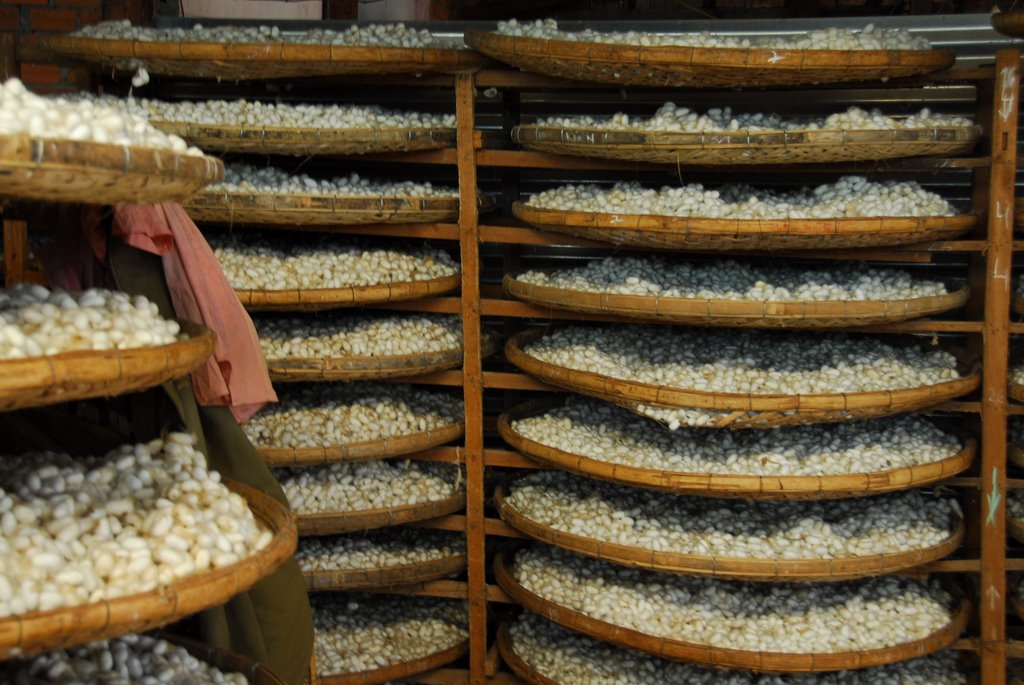
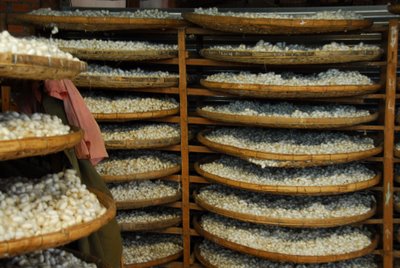
At the factory, they don't wait for the cocoons to hatch. Cocoons are brought from all over the area and collected in these big baskets.
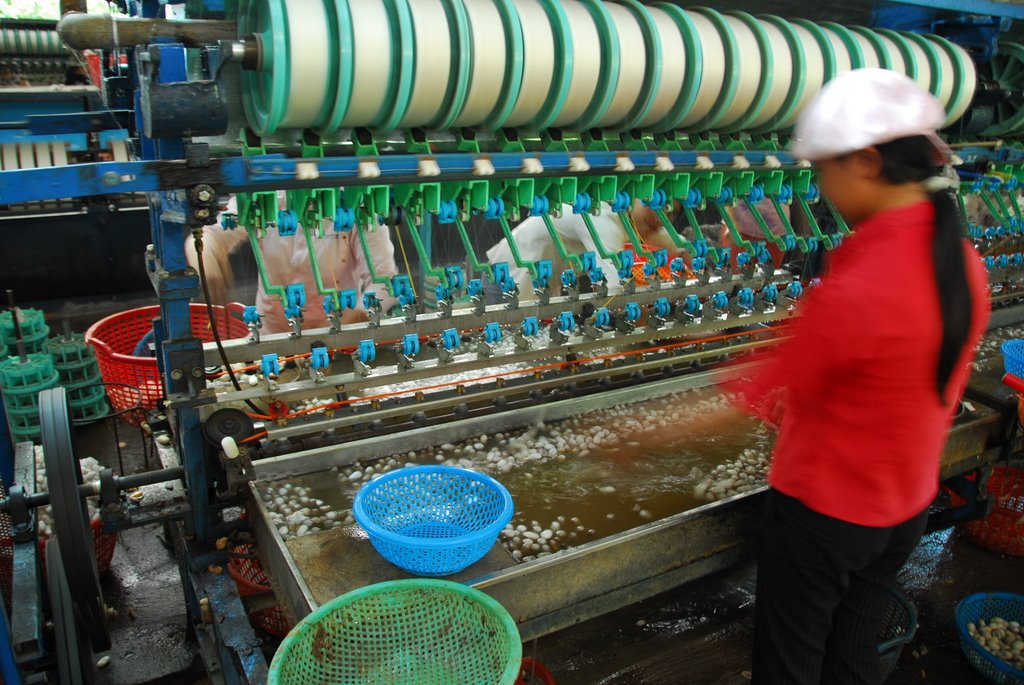
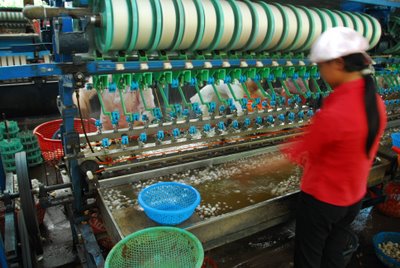
Then they are put into boiling water and "cooked" until the butterworm inside dies. The cocoons then float in the water while one of these factory workers tries to find the thread and feed it into the machine to unravel and put on a spool.
The ones that can't be automatically unraveled are processed manually to produce stronger but less fine silk. What's left, dead butterworms, is collected in these baskets.
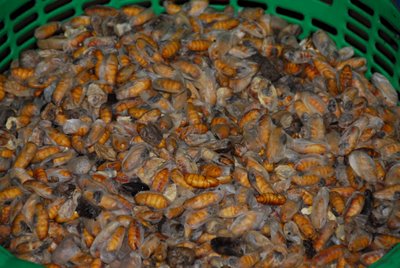
Since nothing goes to waste, maybe they feed it to the drunk pigs?
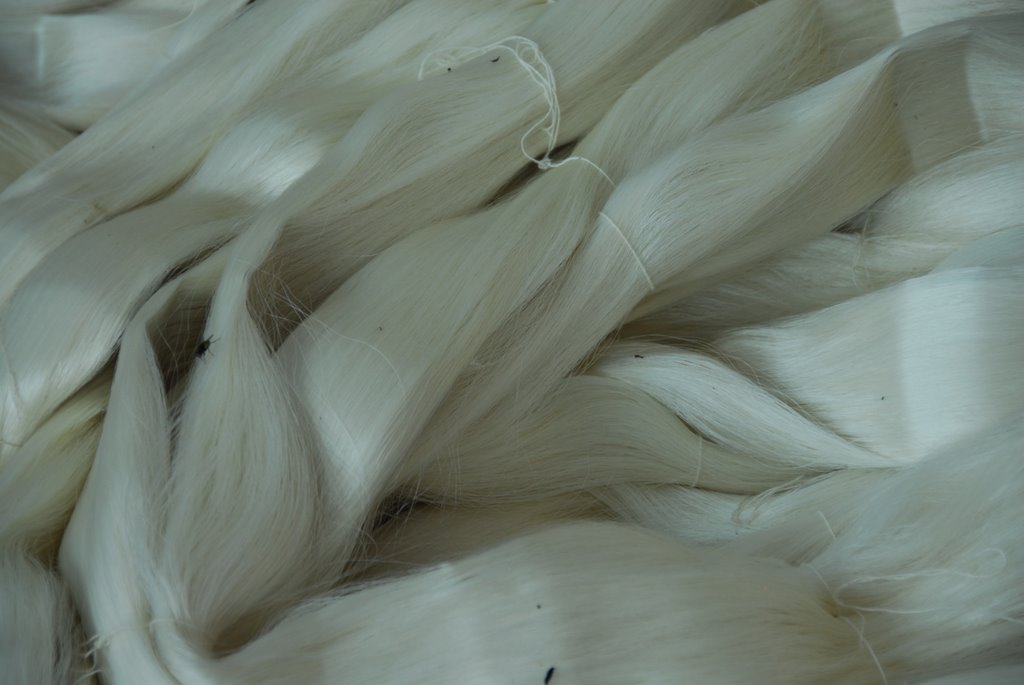
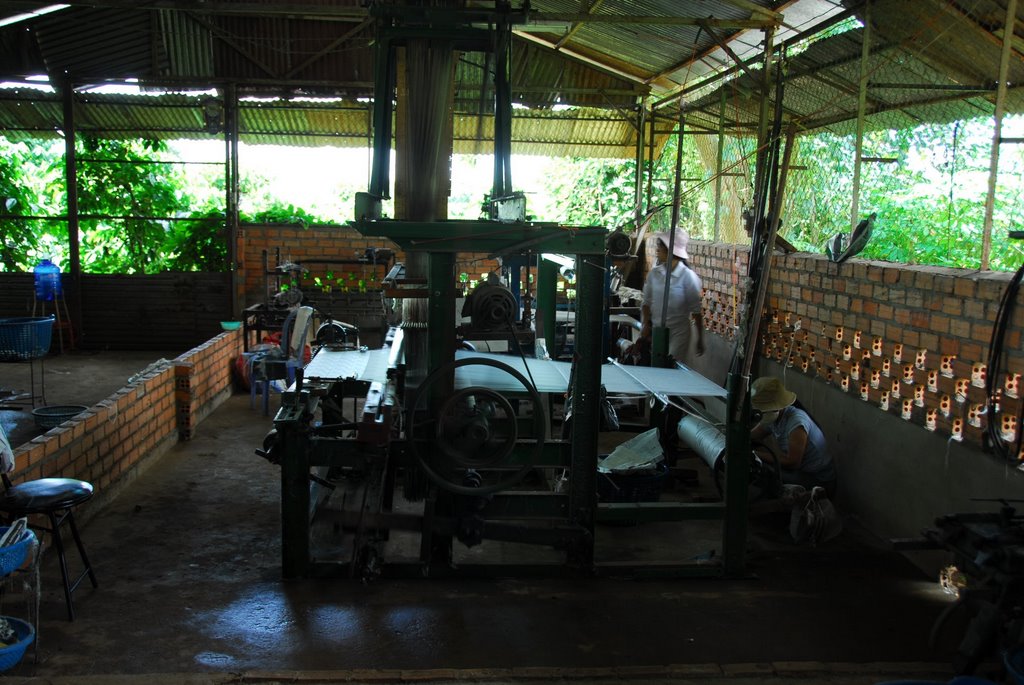
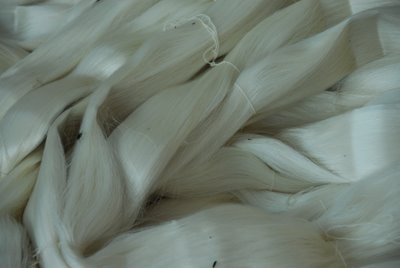
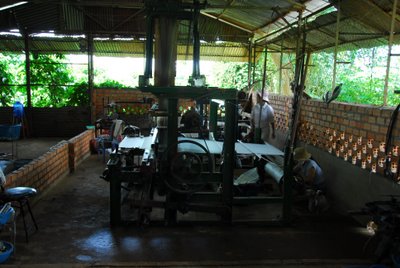
The thread is then collected in bigger spools. Some of it is sold as thread and some woven into fabric in a loom inside the factory.
 Driving Lesson #1 - The Horn The Horn, it Sounds So Forlorn
There are a number of switches you've got to make in your mind before successfully surviving driving in Vietnam. The first one is the use of the horn. In most western countries, the horn is used for 1) notifying of extreme danger, making you react quickly or 2) marking the end of a new-york second, the light has changed to green and why haven't you already started moving?
Its use in Vietnam (and as far as I recall in India too) is very different. First of all, it's not used as an emergency tool. The horn is used to notify someone of your presence. If you're driving behind them, you're responsible to move and accommodate them whatever they do. If you decide to pass them, you're likely to sound the horn to let them know you're coming. This is more common in the cities since there's less traffic to worry about when passing someone in the country side. A similar use is for cars and trucks to notify everyone that they're coming through and everyone had better MOVE or else bad things will happen. Again - this is not a sign of "emergency". More like "danger, danger Will Robinson" you'd better do something to accommodate it.
Lak LakeOn the first night, we stayed in a town on the shores of Lak Lake. The lake itself is very serene, still water with islands, fish traps and fisherman paddling around in dug out canoes.

Once we checked into the hotel, we drove on to the Jun village, a minority village where the M'Nong people live. M'Nong houses are long houses built on stilts. The extended family and all possesions live inside. Animals and livestock live under the house. The original houses were made of wood, though you could see a television set through the open doorway. The M'Nong grow rice, like most other people near large bodies of water. They also fish the lake extensively.
Cock Fighting
Another part of village life is animals in the street. On our way to the Jun village we came upon these two roosters fighting it out. In case you have never seen it, here's a short clip:
 Day 1 Continues - Dalat to Lak Lake – 160 km